Nevada Traffic Research & Education Newsletter
June 9, 2026 // VOL. 15, ISSUE 01

Fatal Wrong-Way Crashes on Nevada Interstates and County Roads (2017–2024)
By: Noehealani Antolin, PhD, MPH; Ana L. Reyes, MS; Selam Ayele, MPH(c); Blessing Imade, MPH; Darin Mains, MPH; Kavita Batra, PhD, MPH, BDS, FRSPH; Deborah A. Kuhls, MD FACS FCCM MCCM FRCST (Hon)
Wrong Way Driving on Interstate Highways / County Roads
According to the Federal Highway Administration (FHWA), a wrong-way driving crash occurs when a vehicle travels against the legal flow of traffic on a divided highway or access ramp and collides with a vehicle traveling in the proper direction [1]. Although relatively rare, wrong-way crashes accounted for 3.7% of all fatal crashes on divided highways in the United States [2]. These crashes often involve high-speed head-on or opposite-direction sideswipe impacts, resulting in severe injuries and/or fatalities.
In a recent research brief published by the AAA Foundation for Traffic Safety on fatal wrong-way crashes on divided highways in the United States between 2014 to 2023, 4,164 fatal wrong-way crashes were reported, resulting in a total of 5,730 fatalities [3]. Notably, the annual number of fatal wrong-way crashes nationwide were increasing more than the total number of fatal crashes during this time period. High alcohol impairment was identified as the leading risk factor for wrong-way crashes; with nearly 70% recording elevated blood alcohol concentration (BAC) above 0.08g/dL [3].
This TREND summarizes fatal wrong-way driving crashes and fatalities occurring on Nevada’s interstate divided highways and county roads from 2017 to 2024, with a focus on documented alcohol and drug involvement among wrong-way drivers. This analysis is purely descriptive, and no cause-and-effect conclusions should be drawn from the findings. These findings are based on fatal crash data and do not capture non-fatal wrong-way incidents.
Data Source
Data were obtained from the Fatality Analysis Reporting System (FARS), a nationwide census of fatal motor vehicle crashes on public roads in the United States and maintained by the National Highway Traffic Safety Administration (NHTSA).
These data included fatal wrong-way driving crashes in Nevada that occurred between 2017 and 2024, with 2024 data reported as complete and not provisional. The data variables include driver age, county, location (specified interstate highway, such as I-215), trafficway description (i.e. two-way with median barrier; entrance/exit ramp; two-way, unprotected median), and substance involvement (i.e. alcohol and/or drug involvement). Crashes involving vehicles that crossed a median barrier were excluded.
Results
Wrong way crashes and Fatalities
In Nevada, between 2017 and 2024, a total of 38 fatal wrong-way crashes resulted in 57 deaths on interstate highways and county roads, with 2024 accounting for the highest numbers of both crashes and fatalities (Figure 1). The number of fatalities exceeds the number of fatal crashes, indicating that some crashes resulted in multiple deaths. Fatal wrong-way crashes were concentrated primarily in Clark County (n=23, 60.5%), followed by Washoe County (n=11, 29%)
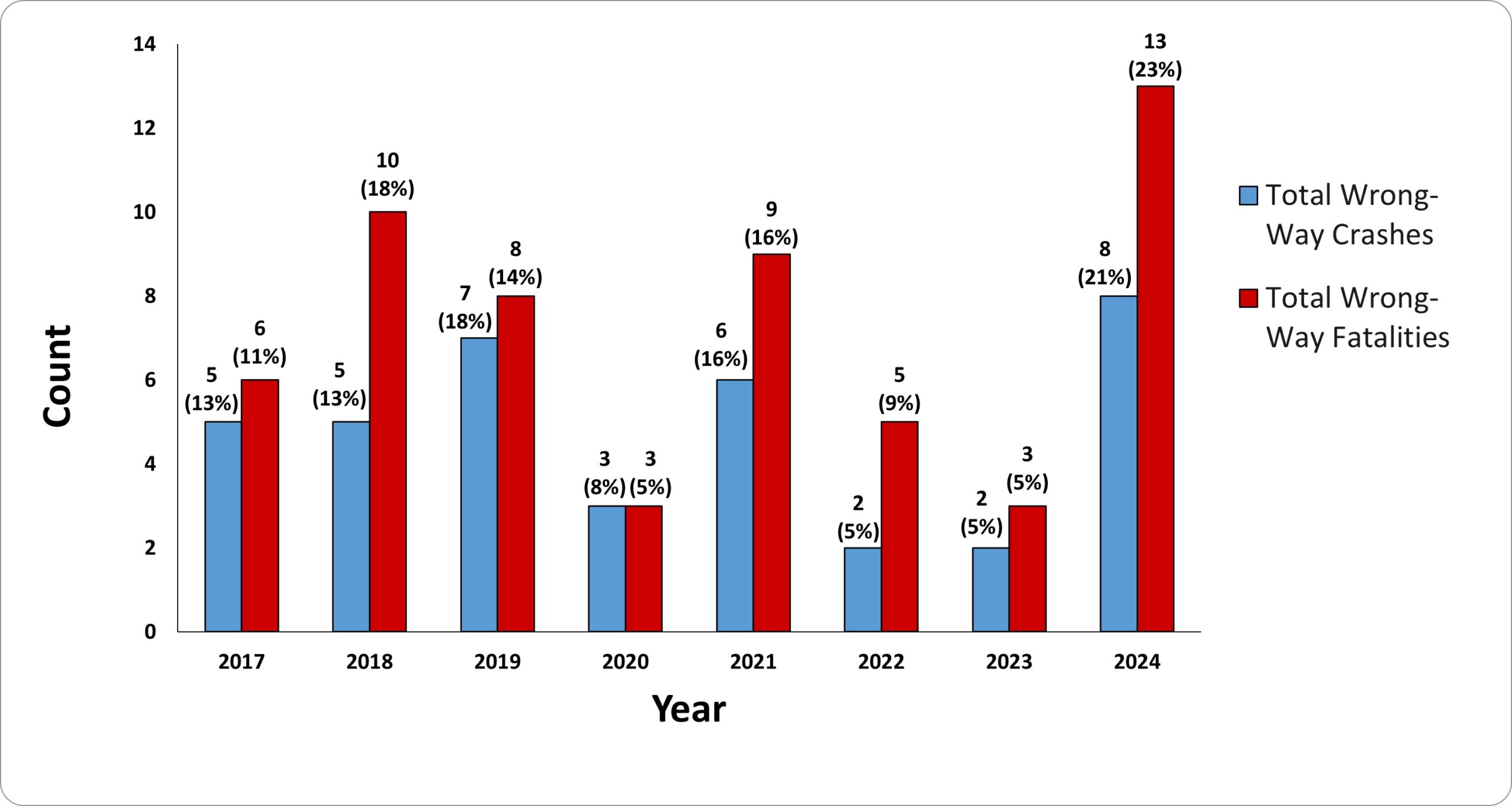
Figure 1. Wrong-Way Crashes and Fatalities on Nevada Interstates and County Roads between 2017-2024
Wrong Way Driver Impairment Characteristics
Across the 38 wrong-way driving crashes recorded in Nevada between 2017 and 2024, substance involvement among wrong-way drivers was common when toxicology testing was conducted (Figure 2). Among the 38 wrong-way drivers, 33 (87%) were positive for at least one substance, most commonly alcohol alone or in combination with other drugs.
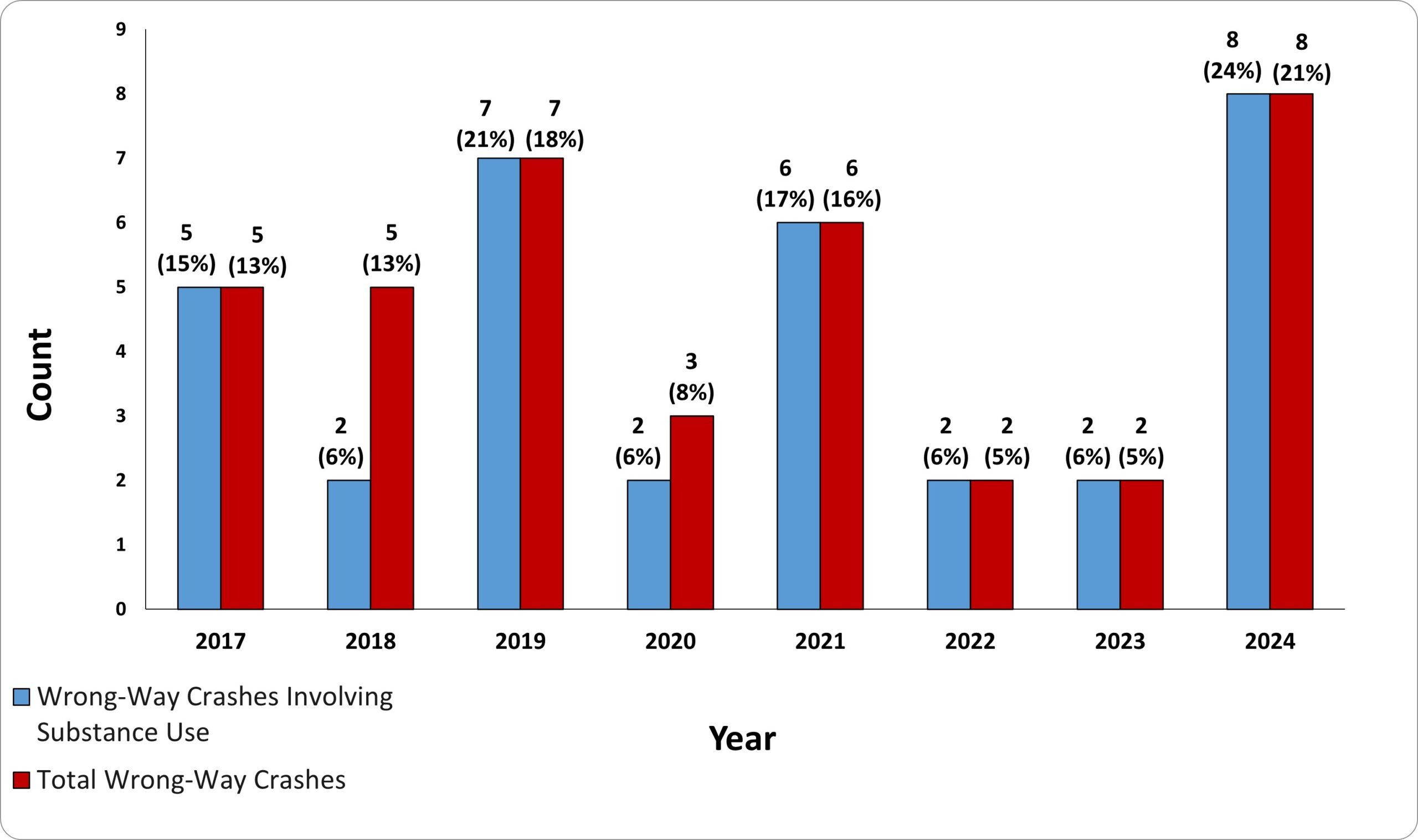
Figure 2. Total Wrong-Way Crashes (n=38) and Wrong-Way Crashes involving substance use among wrong-way drivers ( n=33) between 2017-2024
Note: Drivers not tested for alcohol or drugs are included in total crash counts but excluded from substance-involved counts. Substance involvement reflects a positive drug and/or alcohol test result among tested-wrong way drivers. In 2018, out of the five wrong-way crashes, two wrong-way drivers tested positive, one was not tested and two tested negative. In 2020, out of the three wrong-way crashes, two drivers tested positive and one was not tested.
Key Takeaways
- A wrong-way crash typically involves high-speed collisions, such as head-on or opposite-direction sideswipes, where the transfer of kinetic energy between vehicles leads to more severe injuries or higher likelihood of death, than other types of crashes [4].
- Although wrong-way driving crashes are relatively rare, they are among the most dangerous traffic events due to high travel speeds and limited opportunities for drivers to avoid a collision.
- Fatal wrong-way crashes were concentrated primarily in Clark County (n=23, 60.5%), followed by Washoe County (n=11, 29%).
- Substance use (i.e., alcohol and/or drugs) was involved in the majority (n=34, 89.47%) of wrong-way driving crashes, therefore understanding the factors contributing to wrong-way driving crashes is critical for developing targeted interventions and reducing their occurrence.
- Driver education and public awareness, particularly regarding impaired driving and recognition of wrong-way warning signs, are important components of prevention efforts.
- Engineering countermeasures, such as enhanced wrong-way detection systems and improved ramp signage, may further reduce crash occurrence.
Nevada Wrong-Way Driver Detection Countermeasures:
As part of ongoing traffic safety initiatives, the Nevada Department of Transportation (NDOT) has expanded the use of wrong-way driver detection systems throughout the Las Vegas Valley [5]. In 2025, NDOT identified locations for installation of these systems, which use sensor technology and flashing warning signs to detect and alert wrong-way drivers in real time while simultaneously notifying transportation officials and law enforcement. These engineering countermeasures are intended to reduce the frequency and severity of wrong-way crashes, which are often associated with impaired driving and high crash fatality risk [6].
References
- Federal Highway Administration. Wrong-way driving crashes. Updated July 26, 2024. Accessed February 17, 2016. https://highways.dot.gov/safety/intersection-safety/about
- Villavicencio, L., Añorve, V. & Arnold, L.S. Fatal Wrong-Way Crashes on Divided Highways. AAA Foundation for Traffic Safety; 2021. Accessed February 17, 2026. https://aaafoundation.org/fatal-wrong-way-crashes-on-divided-highways/
- AAA Foundation for Traffic Safety. (2026). Fatal wrong-way crashes on divided highways, United States, 2014-2023. https://aaafoundation.org/wp-content/uploads/2026/03/202603-AAAFTS-Wrong-Way-Crashes.pdf
- Imade B, Ayele S, Reyes A, Antolin N, Batra K, Mavegam Tango B, Pharr J, Kuhls D. Slowing down for safety: addressing the impact of speeding. UNLV Traffic Safety Trends. 2025;14(1). Available at: https://trafficsafety.sites.unlv.edu/trend-14-1-slowing-down-for-safety-addressing-the-impact-of-speeding/
- Nevada Department of Transportation. Overnight I-215 ramp closures for wrong-way driver system testing. Accessed May 11, 2026. https://www.dot.nv.gov/Home/Components/News/News/8694/16
- Nevada Department of Transportation. Wrong way driver system. Accessed May 11, 2026. https://www.dot.nv.gov/safety/wrong-way-driver-system
Sign up to receive our Trends Newsletters by email!

GET IN TOUCH
