
Nevada Traffic Research & Education Newsletter
JANUARY 2021 // VOL. 10, ISSUE 01
Disponible en español

About our Database
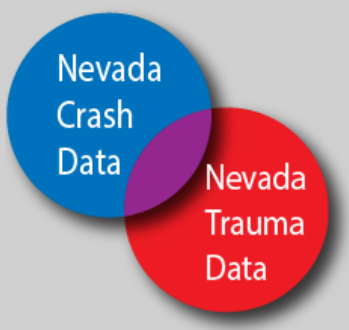
This quarter’s TREND In Focus utilizes Nevada statewide linked crash and trauma center data for young drivers aged 15-20 in Nevada from years 2013-2017 (N=722). Our linked-crash trauma database combines crash data from the Nevada Department of Transportation and trauma registry data from Nevada’s four ACS-verified trauma centers.
TREND In Focus: Graduated Driver Licensing
Crash and Trauma Outcomes for Young Drivers Ages 15-17 vs. 18-20
By Laura K. Gryder, MA; Samantha A. Slinkard-Barnum, MPH; Deborah A. Kuhls, MD
Young drivers (YD) ages 15-20 are widely regarded as a vulnerable road user group. Numerous factors contribute to disproportionate crash rates for this population, including driving inexperience. Nevada has Graduated Driver License (GDL) laws that are intended to help YD ages 15 and a half to 18 years of age safely learn how to drive through gradual increases in driving privileges and independence. This analysis investigates crash and trauma outcomes for YD who were within GDL age (15-17; “GDL drivers”) in comparison to older YD (age 18-20; “non-GDL drivers”) between 2013 and 2017. Limitations: Older drivers included in this analysis may have gone through the GDL process when they were younger. Further research on this topic should exclude these drivers through linkage with statewide licensure records.
Results
Demographics:
During the period of study, 722 YD ages 15-20 were involved in a crash and admitted to a NV trauma center. The mean age of the total study sample was 18.65 (median age of 17) and there were 563 drivers over 18 years of age included in the analysis (78% of total). The two groups did not differ significantly in gender or racial distribution.

Hospital Resource Utilization and Outcomes:
Few significant differences in injuries between Young Drivers (YD) of GDL and non-GDL age were observed. While no differences in frequency of death or discharge disposition to a nursing or rehabilitation facility were seen, YD age 18-20 were more frequently sent to a correctional facility than their younger counterparts (Fig. 1). One likely contributing factor is the greater frequency of suspected alcohol impairment among the age 18-20 drivers compared to those 15-17. Time spent in hospital and time spent on a ventilator varied by age group, and the difference in time spent in the ICU was significantly different between the two groups (Fig. 2).

Total hospital charges for the study population was nearly $23,671,000, with an average charge of $ 32,785 and median of nearly $20,000. The 15-17 year old drivers had an average hospital charge of $28,355 compared to the average charge of $34,036 for the 18-20 year olds. There was no statistically significant difference between the YD groups for hospital charges.
Driving Behaviors and Crash Factors:
Young drivers admitted to a NV trauma center above the current GDL age cap (18+) are similar to GDL drivers (age <18) in a number of ways, however a few notable differences exist. YD age 18+ were more frequently suspected of drinking (15% vs. 7%), wore seatbelts less often (84% vs. 92%), and drove on faster (>60mph) roads (36% vs. 27%) compared to their younger counterparts. Comparing age groups, Fig. 3 shows that YD age 18+ were significantly more likely to crash due to unsafe lane changes and lane departures, but YD age <18 more frequently failed to yield. YDs 15-20 had issues with speeding, driving too fast for conditions, and disregard of road signs/signals equally.

Spotlight
Graduated Driver Licensing
By Samantha A. Slinkard-Barnum, MPH
Many teenagers across the country count the days until they are old enough to drive, and reaching driving age is an important milestone in the lives of many young people. In some parts of the country, teenagers as young as 14 are allowed the privilege to drive through the process of graduated driver licensing (GDL). Graduated driver licensing has been adopted by all US states after its introduction in Florida in 1996 (IIHS, 2020). The concept was first introduced in New Zealand in 1987 (IIHS, 2020). GDL is intended to allow young and novice drivers safely learn to drive under restrictions and supervision.
GDL laws typically have three stages: learners permits, provisional or intermediate licenses, and full/unrestricted licenses. There are no federal laws requiring GDL in the states, however federal agencies such as NHTSA and the CDC recommend them as countermeasures that work for protecting young and novice drivers (Richard, et al., 2018; CDC, 2019).
The requirements of each stage of GDL varies in each state, however there are some consistencies. GDL is required for young drivers under 18 in every state and there are largely no restrictions on newly licensed drivers over 18 (GHSA, 2020). New Jersey is the only state that extends all GDL restrictions to new drivers under 21 years old and does not allow teen drivers to apply for a license until they are 17 years old (NJ MVC, 2019). New Jersey’s extended restrictions have led to a decrease in crashes among 18 year olds within their first year of licensure (IIHS, 2020). Further research is needed to determine the effect of extended GDL restrictions on drivers 18-20 years old, but a study utilizing a New Jersey linked crash-injury database suggests that extending restrictions to that age group could be beneficial (Curry, et al., 2018).
GDL Requirements in Nevada
- Young drivers are eligible to apply for their learners permit at 15 and a half years old.
- The learners stage lasts 6 months and drivers must log 50 hours (100 if driver’s ed is not offered within 30 miles of their home) of supervised driving, 10 hours must be at night.
- Young drivers are eligible for the intermediate stage (unsupervised driving) at 16 years old.
- There are nighttime, passenger, and other restrictions for the first 6 months of the intermediate license, all secondary enforcement.
- Full driving privileges are granted at 16 and a half years old for daytime driving, 18 years old for nighttime driving.
- Young drivers 18 and over are not required to go through GDL.
(NV DMV, 2020)
Spotlight: References
- Centers for Disease Control and Prevention [CDC]. (2019). Teen Drivers. https://www.cdc.gov/teen-drivers/prevention/index.html
- Curry, A.E., Metzger, K.B., Williams, A.F., Tefft, B.C., Foss, R.B. (2018). PW2529 Extending graduated driver licensing policy to older novice drivers: A critical analysis of current evidence. Injury Prevention, 24: A92-A93.
- Governors Highway Safety Association [GHSA]. (2020). Teen and Novice Drivers. https://www.ghsa.org/state-laws/issues/teen%20and%20novice%20drivers
- Insurance Institute for Highway Safety [IIHS]. (2020). Teenagers. https://www.iihs.org/topics/teenagers#graduated-licensing
- Nevada Department of Motor Vehicles [NV DMV]. (2020). Nevada Teen Driving. https://dmvnv.com/nvdlteens.htm
- New Jersey Motor Vehicle Commission [NJ MVC]. (2019). Graduated Driver License. https://www.state.nj.us/mvc/about/gdlsafety.htm
- Richard, C.M., Magee, K., Bacon-Abdelmoteleb, P., Brown, J.L. (2018). Countermeasures that work: A highway safety countermeasure guide for State Highway Safety Offices, Ninth edition (Report No. DOT HS 812 478). Washington, DC: National Highway Traffic Safety Administration.
At Home with the Traffic Safety Research Team
Winter Travel: How to Stay Safe and Prevent Fatalities While on the Road
By Merika Charupoom and Emily Carter
The impact of the COVID-19 pandemic on transportation has driven people away from public transportation sources to personal motor vehicles as safer environments that aim to protect from virus exposure. Due to this change, it is understandable that more people will resort to driving personal vehicles this winter season. As a preventative measure, our team created a Safe Winter Driving series as a safety guide for different road user types on staying safe on the road.
With increased hazardous driving conditions and shorter days limiting daylight travel, an increase in crashes resulting in serious injuries and deaths is expected. Some of the main dangers include drowsy driving, weather hazards, and unfamiliar road conditions. Winter driving is different depending on the geographical area. The Nevada Department of Transportation (NDOT) has a resource (www.nevadadot.com/safety/safe- winter-driving) that travelers can refer to before getting on the road. It is important for road users to prepare their vehicles properly and plan ahead for the type of weather conditions that they are going to experience driving to their destination. These concepts are highlighted in our Safe Winter Driving for Northern Nevada Region post.
Our team wanted to emphasize preparedness for driving in unfamiliar road conditions for Nevadans. Many drivers tend to overlook the importance of preparing for different road and weather conditions. Nevada has a diverse landscape; the majority of southern Nevadans are unfamiliar with snowy roads, and Nevadans who live in rural areas may not be as familiar with busy traffic. Taking the extra steps to plan ahead and prioritize safety helps to prevent crashes and fatalities.


Staff Feature
Emily Carter

Emily Carter is a Student Worker engaged in Traffic Safety Research at the University of Nevada, Las Vegas (UNLV) School of Medicine since June 2019. Emily is currently an undergraduate at UNLV pursuing a bachelor’s degree in Biological Sciences and minor in Public Health. Emily’s interest in public health drew her to the traffic safety research team’s work in injury prevention and safety messaging for Nevada roadway users. Emily’s work includes social media management, literature review, a variety of data analysis, and project presentations. Born and raised in Las Vegas, Emily’s lifelong dream is to become a physician to serve her local community. Through the opportunity to shadow at the UMC Trauma Center, Emily’s interests in injury prevention and traffic safety have sparked her research interests. Outside of the UNLV Traffic Safety Research Team, Emily enjoys exploring new restaurants, visiting national parks, and spending time with her loved ones.
Sign up to receive our Trends Newsletters by email!

GET IN TOUCH
Data Partners






Funding Statement
Funding for this project comes from the Nevada Department of Public Safety‐Office of Traffic Safety.
Grants:
#TS-2019-UNLV-00089
#TS-2019-UNLV-00149

