Nevada Traffic Research & Education Newsletter
MARCH 2022 // VOL. 11, ISSUE 02
Disponible en español

TREND In Focus: Nevada Non-Adjudicated Distracted Driving Citations
A descriptive analysis of statewide citations for distraction-related violations (2018-2021)
By Emily Strickler, MPH, Merika Charupoom, Emily Carter, Laura K. Gryder, MA, and Deborah A. Kuhls, MD
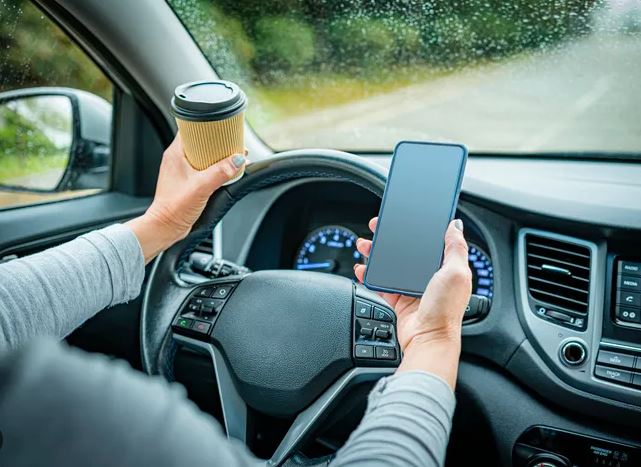
Distracted driving is defined as a driver engaging in another activity that diverts their attention from the road. Some common activities include eating and drinking, talking to passengers in the vehicle, adjusting audio or climate controls, and GPS navigation. The most common distracted driving behavior is talking or texting on the phone. In 2019, distracted driving was associated with approximately 3,000 deaths and an additional 400,000 injuries in the United States [1]. Under Nevada primary enforcement law 484B.165, it is illegal for all drivers to talk or text on a handheld cellphone or any similar device while driving [2,3]. According to NHTSA’s 2019 statistical findings summary on distracted driving, 9% (344 of 3,968) of drivers in the 15 to 20 age group involved in fatal crashes were distracted at the time of the crash [4].
The CDC suggests utilizing the following methods to prevent and curtail distracted driving: high-visibility enforcement (HVE) in addition to implementing cellphone and texting laws as well as a comprehensive Graduated Driver Licensing (GDL) system for young drivers that restricts use of cell phones while driving [5]. This TREND in Focus analysis investigates the prevalence and demographics Nevada drivers who were cited for distracted driving from 2018-2021 (N=72,797).
Results
Overview
From 2018-2021 there were 1,425,762 traffic citations issued by law enforcement in Nevada. Of those, 72,797 (5%) were distracted driving violations. Distracted driving violations are comprised of the following behaviors: illegal cellphone device usage (first, second, and third offenses), other handheld device use violations, drivers illegally viewing a TV receiver, and inattentive driving. The majority of distracted driving violations (60.3%) were for first the time offense of using a cellphone (Fig. 1).
Demographics
Drivers issued a distracted driving citation were on average (mean) 38 years of age (median 36, IQR 28-47). Approximately half (49.3%) of all distracted driving violators were issued to drivers ≤35 years old (Fig. 2). Men were more frequently cited than women (55.3% vs. 44.7%, p<.001). The majority of citations were issued in Clark County, NV (67.8%). Of those who were cited, approximately 8 of every 10 drivers had Nevada driver’s licenses and vehicles registered in Nevada. The race and ethnicity breakdown for distracted driving citations were: Asian (4.7%), Black (10.5%), Hispanic (11.6%), Indian (Native American) (0.5%), White (59.3%), with the remaining data missing or unknown (13.4%).
Citation Information
The majority of citations were issued between 8AM-4PM (62.7%), and 85% of citations were issued on a weekday. There were 270 citations issued for driving distracted in the presence of workers, and over 444 citations issued for driving distracted in a school zone. Traffic volume at the time of the distracted driving citation reveals that the majority of citations were issued in medium or moderate traffic (55.4%) followed by light traffic (24.9%). Accidents were the result of distracted driving for 5,421 (7.4%) of the citations issued between 2018 and 2021. For each type of distracted driving violation, there have been decreases in the number of citations between 2018 and 2021. In 2018 there were 15,938 first time cellphone use violations (63.4% of total that year) which reduced to 7,047 first time cellphone use violations in 2021 (56.5% total that year).


TREND in Focus: References
- National Highway Traffic Safety Administration (NHTSA). (n.d.). Distracted Driving.
Retrieved from https://www.nhtsa.gov/risky-driving/distracted-driving - Insurance Institute for Highway Safety (IIHS). (2021). Distracted Driving.
Retrieved from https://www.iihs.org/research-areas/distracted-driving - Nevada Department of Transportation (NDOT). (n.d.). Handheld Cellphone Ban.
Retrieved from https://www.dot.nv.gov/safety/handheld-cell-phone-ban - National Center for Statistics and Analysis. (2021). Summary of Statistical Findings: Distracted Driving 2019 (Traffic Safety Facts. Report No. DOT HS 813 111 ). National Highway Traffic Safety Administration.
- Centers for Disease Control and Prevention (CDC). (2021). Distracted Driving.
Retrieved from https://www.cdc.gov/distracted-driving/prevention/?CDC_AAref_Val=https://www.cdc.gov/transportationsafety/distracted_driving/index.html
Spotlight
Published and Impactful – Findings From Lindsay Buczek’s Analysis of an Impaired and Distracted Driving Prevention Program for High School Students
By Emily Carter
You Drink, You Drive, You Lose Program

https://doi.org/10.3390/healthcare10030474

Lindsay Buczek is currently finishing up her third year as a medical student at Kirk Kerkorian School of Medicine. She joined the Traffic Safety Research team in summer of 2020 during her research rotation. Buczek became interested in trauma after shadowing at the University Medical Center Trauma Center and volunteering in the emergency medicine department in Las Vegas. This led her to become interested in traffic safety and how to prevent injuries on Nevada’s roadways. For her mentorship project, Buczek analyzed survey data collected during the 2020 You Drink, You Drive, You Lose (YDYDYL) Program held by UMC-Trauma at a local high school. The purpose of her research was to determine the program’s long-term impact on changing participant knowledge and attitudes regarding impaired and distracted driving. While participating in YDYDYL, students engage in collaborative learning experiences including a post-traffic crash rescue demonstration. Event volunteers include internal and external traffic safety and injury prevention state partners. Buczek’s data derives from YDYDYL survey data collected in March of 2020; approximately half of students were repeat YDYDYL attendees, and the other half unexposed. The impactful data from this study provides a baseline for the further development of distracted driving prevention programs.
Impactful Data
349 students surveys were included in the data analysis. Previous participants and first time participants did not significantly differ in terms of history of using impairing substances. One strength of this study is its ability to assess knowledge and attitudes of previous program participants approximately one year after exposure, and compare those measurements to first time participants. Students who participated in the program previously were more likely to express protective self-reported behaviors and safe driving attitudes compared to first time participants. YDYDYL provides participants with an impactful educational opportunity to improve occupant and driver safety. This research provides evidence for improving this program (and others like it) through the increased use of peer messaging.
Community Outreach
By Merika Charupoom and Emily Carter
PedSAFE Sacred Shoes Campaign

Our Traffic Safety Research team partnered with Erin Breen from PedSAFE in the Sacred Shoes Campaign to promote awareness and highlight the growing epidemic of pedestrian fatalities in Clark County, NV. Breen is the director of the Road Equity Alliance Project (REAP) which focuses on making our roads safer for all road users, but has a special focus on pedestrian safety, the most vulnerable of road users.
A pair of white shoes will be hung at the the location of each Southern Nevada pedestrian fatality that occurred from July 2020 through August 2021 (N=60). The shoes will serve as temporary memorials to signify the senseless deaths of pedestrians. The campaign launched on March 25th, 2022.

Our team created a geospatial map that displays where the memorials were placed in accordance with the specific fatality. This map further displays more relevant information regarding each memorial through a pop-up feature. The goal of this campaign is to not only memorialize the lives that were lost due to auto-pedestrian crashes, but also to remind drivers and pedestrians to be safe and practice good traffic behaviors.
Super Bowl LVI: “Fans Don’t Let Fans Drive Drunk” Campaign Series

The “Fans Don’t Let Fans Drive Drunk” campaign was launched by TEAM (Techniques for Effective Alcohol Management) Coalition partnering with the NFL and the National Highway Traffic Safety Administration (NHTSA) to remind sports fans that they play an important role in promoting positive fan behavior and responsible drinking.
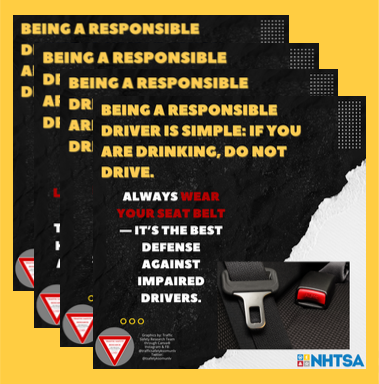
In 2019, approximately 10k traffic deaths involved drunk driving [NHTSA]. Every year, our team creates and share informational materials with tips for fans on how to be safe and responsible on the road. This year’s material focused on the importance of seat belts and ways to avoid drunk driving. As Las Vegas is now the home to the Raiders, it is important to continue to educate fans on the dangers of drunk driving.
Researcher Feature: Medical Student
Danielle Struck, MS2

The primary goal of my research is to determine the prevalence and demographic trends of arrests for driving under the influence of alcohol and drugs in the state of Nevada. In the office, I organized and compiled data from three toxicology laboratories and performed a literature review. This study will help inform local and state policymakers, law enforcement, and public health entities about the extent of DUIs and DUIDs in Nevada.
When considering my medical career, I am currently excited to explore all of the different specialties. But no matter what speciality I end up pursuing, this research experience has fostered my professional development, because it has emphasized the collaborative nature of medicine and importance of preventative care.
Researcher Feature: Medical Student
Oscar Monterrosa, MS2

As a medical student researcher with the Traffic Safety Research team, I’ve worked on two primary projects: 1) Determining rates of over-triage among trauma centers in Southern Nevada using data from the Center for Health Information Analysis, and 2) A DUI blood drug and alcohol toxicology study. Prior to my medical student career I gained experience as an EMS, giving me a unique perspective to tackle these research projects. In medicine, I am interested in the fields of Trauma, EMS, Emergency Medicine, Critical Care, and Surgery. For the remainder of my medical student career, I hope to take a deeper dive into these fields and continue to serve the Las Vegas community.
Researcher Feature: Medical Student
Pedro Gonzalez, MS2

My project aims to examine the demographics, behaviors, and injury outcomes of passengers involved in pediatric motor vehicle collisions. We will compare individuals by age (0-12 years) who were restrained appropriately for age, restrained inappropriately for age, or not restrained at the time of collision. This project also seeks to evaluate risks associated with null or improper use of restraints across demographics. A subset of the Kirk Kerkorian SOM – UNLV Department of Surgery’s linked crash-trauma database was utilized for this research: motor vehicle collisions and trauma patients age 0-12 for years 2005-2017. The main objective of this research is to use local data to educate the community as well as decision-makers on the importance of Nevada CRS legislation aligning with national medical recommendations.
In medicine, I am still exploring my interests. My cohort is beginning clinical rotations this year. I plan to stay open-minded and give each rotation equal opportunity. As of today, my leading interests include anesthesiology and surgery.
Infographics
Sign up to receive our Trends Newsletters by email!

GET IN TOUCH
Data Partners





Funding Statement
Funding for this project comes from the Nevada Department of Public Safety‐Office of Traffic Safety.
Grant #TS-2021-UNLV-00072

